Affichage des articles dont le libellé est Politics News. Afficher tous les articles

lundi 24 novembre 2008

Bill proposed that would prevent Bush for issuing Presidential Pardons to senior members of administration during final 90 days of his term in office

Obviously there are things that have transpired in the Bush Administration that people need to be held accountable for:
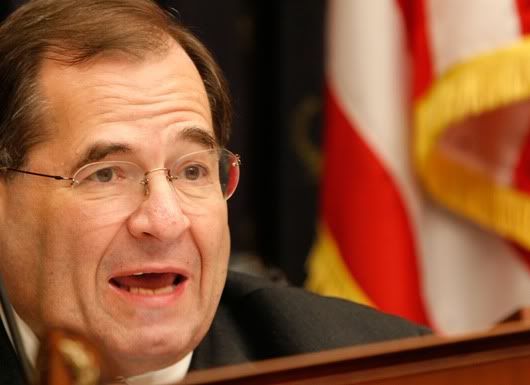
The concern is that a Bush pardon would frustrate forever any attempt to make his administration accountable. If you share that concern then you should contact your representatives and ask them to support Representative Jerrold Nadler (D-NY) who introduced H.RES. 1531, which states, as follows:

Expressing the sense of the House of Representatives that the President of the United States should not issue pardons to senior members of his administration during the final 90 days of his term of office.

Whereas Article II, section 2, clause 1, of the Constitution of the United States provides that ''[t]he President . . . shall have Power to grant Reprieves and Pardons for Offences against the United States, except in Cases of Impeachment'';

Whereas Alexander Hamilton, in Federalist #74, stated, ''[a]s the sense of responsibility is always strongest, in proportion as it is undivided, it may be inferred that a single man would be most ready to attend to the force of those motives which might plead for a mitigation of the rigor of the law, and least apt to yield to considerations which were calculated to shelter a fit object of its vengeance'';

Whereas the Supreme Court has observed that ''[a] pardon reaches both the punishment prescribed for the offence and the guilt of the offender; and when the pardon is full, it releases the punishment and blots out of existence the guilt, so that in the eye of the law the offender is as innocent as if he had never committed the offence. If granted before conviction, it prevents . . . the penalties and disabilities consequent upon conviction from attaching; if granted after conviction, it removes the penalties and disabilities, and restores him to all his civil rights; it makes him, as it were, a new man, and gives him a new credit and capacity.'' Ex Parte Garland, 71 U.S. (4 Wall.) 333, 380 (1866);

Whereas during the Constitutional convention, George Mason expressed the concern that a president could abuse his pardon power to ''pardon crimes which were advised by himself'' or, before indictment or conviction, ''to stop inquiry and prevent detection'';

Whereas James Madison responded to Mason's concerns by stating that ''[i]f the President be connected, in any suspicious manner, with any person, and there be grounds [to] believe he will shelter him, the House of Representatives can impeach him; they can remove him if found guilty'';

Whereas although not constitutionally binding, the Pardon Attorney's regulations governing the granting of presidential pardons states ''[n]o petition for pardon should be filed until the expiration of a waiting period of at least five years after the date of the release of the petitioner from confinement or, in case no prison sentence was imposed, until the expiration of a period of at least five years after the date of the conviction of the petitioner. Generally, no petition should be submitted by a person who is on probation, parole, or supervised release.'' 28 C.F.R. 1.2 (2000);

Whereas on President George H.W. Bush granted a full, complete, and unconditional pardon to Elliott Abrams, Duane R. Clarridge, Alan Fiers, Clair George, Robert C. McFarlane, and Caspar W. Weinberger for all offenses charged, prosecuted, or committed in connection with the Iran-Contra Scandal in which he was alleged to have been involved;

Whereas in a press conference on February 22, 2001, President George W. Bush stated, ''Should I decide to grant pardons, I will do so in a fair way. I will have the highest of high standards'';

Whereas investigations by Congressional committees, and press reports, raise serious concerns that senior officials of the administration of President George W. Bush may have committed crimes involving the mistreatment of detainees, the extraordinary rendition of individuals to countries known to engage in torture, illegal surveillance of United States citizens, unlawful leaks of classified information, obstruction of justice, political interference with the conduct of the Justice Department, and other illegal acts;

Whereas President George W. Bush has been urged to grant preemptive pardons to senior administration officials who might face criminal prosecution for actions taken in the course of their official duties; and

Whereas pardons issued during the lame duck period of a President's term would not be subject to the judgment of the voters; Now, therefore, be it Resolved, That--

(1) it is the sense of the House of Representatives that the granting of preemptive pardons by the President to senior officials of his administration for acts they may have taken in the course of their official duties is a dangerous abuse of the pardon power;

(2) it is the sense of the House of Representatives that the President should not grant preemptive pardons to senior officials in his administration for acts they may have taken in the course of their official duties;

(3) it is the sense of the House of Representatives that James Madison was correct in his observation that ''[i]f the President be connected, in any suspicious manner, with any person, and there be grounds [to] believe he will shelter him, the House of Representatives can impeach him; they can remove him if found guilty'';

(4) it is the sense of the House of Representatives that a special investigative commission, or a Select Committee be tasked with investigating possible illegal activities by senior officials of the administration of President George W. Bush, including, if necessary, any abuse of the President's pardon power; and

(5) the next Attorney General of the United States appoint an independent counsel to investigate, and, where appropriate, prosecute illegal acts by senior officials of the administration of President George W. Bush.

Source: Huffington Post
I really hope to see this bill pass because I desperately want to see the Bush Administration pay for their unethical behavior. If you agree, then I encourage you to contact your representative and ask them to support Representative Jerrold Nadler (D-NY) who introduced H.RES. 1531.

If you do not know who your congressman is, you can look them up in this listing on the U.S. House of Representatives website.

Bill proposed that would prevent Bush for issuing Presidential Pardons to senior members of administration during final 90 days of his term in office

Obviously there are things that have transpired in the Bush Administration that people need to be held accountable for:
The concern is that a Bush pardon would frustrate forever any attempt to make his administration accountable. If you share that concern then you should contact your representatives and ask them to support Representative Jerrold Nadler (D-NY) who introduced H.RES. 1531, which states, as follows:

Expressing the sense of the House of Representatives that the President of the United States should not issue pardons to senior members of his administration during the final 90 days of his term of office.

Whereas Article II, section 2, clause 1, of the Constitution of the United States provides that ''[t]he President . . . shall have Power to grant Reprieves and Pardons for Offences against the United States, except in Cases of Impeachment'';

Whereas Alexander Hamilton, in Federalist #74, stated, ''[a]s the sense of responsibility is always strongest, in proportion as it is undivided, it may be inferred that a single man would be most ready to attend to the force of those motives which might plead for a mitigation of the rigor of the law, and least apt to yield to considerations which were calculated to shelter a fit object of its vengeance'';

Whereas the Supreme Court has observed that ''[a] pardon reaches both the punishment prescribed for the offence and the guilt of the offender; and when the pardon is full, it releases the punishment and blots out of existence the guilt, so that in the eye of the law the offender is as innocent as if he had never committed the offence. If granted before conviction, it prevents . . . the penalties and disabilities consequent upon conviction from attaching; if granted after conviction, it removes the penalties and disabilities, and restores him to all his civil rights; it makes him, as it were, a new man, and gives him a new credit and capacity.'' Ex Parte Garland, 71 U.S. (4 Wall.) 333, 380 (1866);

Whereas during the Constitutional convention, George Mason expressed the concern that a president could abuse his pardon power to ''pardon crimes which were advised by himself'' or, before indictment or conviction, ''to stop inquiry and prevent detection'';

Whereas James Madison responded to Mason's concerns by stating that ''[i]f the President be connected, in any suspicious manner, with any person, and there be grounds [to] believe he will shelter him, the House of Representatives can impeach him; they can remove him if found guilty'';

Whereas although not constitutionally binding, the Pardon Attorney's regulations governing the granting of presidential pardons states ''[n]o petition for pardon should be filed until the expiration of a waiting period of at least five years after the date of the release of the petitioner from confinement or, in case no prison sentence was imposed, until the expiration of a period of at least five years after the date of the conviction of the petitioner. Generally, no petition should be submitted by a person who is on probation, parole, or supervised release.'' 28 C.F.R. 1.2 (2000);

Whereas on President George H.W. Bush granted a full, complete, and unconditional pardon to Elliott Abrams, Duane R. Clarridge, Alan Fiers, Clair George, Robert C. McFarlane, and Caspar W. Weinberger for all offenses charged, prosecuted, or committed in connection with the Iran-Contra Scandal in which he was alleged to have been involved;

Whereas in a press conference on February 22, 2001, President George W. Bush stated, ''Should I decide to grant pardons, I will do so in a fair way. I will have the highest of high standards'';

Whereas investigations by Congressional committees, and press reports, raise serious concerns that senior officials of the administration of President George W. Bush may have committed crimes involving the mistreatment of detainees, the extraordinary rendition of individuals to countries known to engage in torture, illegal surveillance of United States citizens, unlawful leaks of classified information, obstruction of justice, political interference with the conduct of the Justice Department, and other illegal acts;

Whereas President George W. Bush has been urged to grant preemptive pardons to senior administration officials who might face criminal prosecution for actions taken in the course of their official duties; and

Whereas pardons issued during the lame duck period of a President's term would not be subject to the judgment of the voters; Now, therefore, be it Resolved, That--

(1) it is the sense of the House of Representatives that the granting of preemptive pardons by the President to senior officials of his administration for acts they may have taken in the course of their official duties is a dangerous abuse of the pardon power;

(2) it is the sense of the House of Representatives that the President should not grant preemptive pardons to senior officials in his administration for acts they may have taken in the course of their official duties;

(3) it is the sense of the House of Representatives that James Madison was correct in his observation that ''[i]f the President be connected, in any suspicious manner, with any person, and there be grounds [to] believe he will shelter him, the House of Representatives can impeach him; they can remove him if found guilty'';

(4) it is the sense of the House of Representatives that a special investigative commission, or a Select Committee be tasked with investigating possible illegal activities by senior officials of the administration of President George W. Bush, including, if necessary, any abuse of the President's pardon power; and

(5) the next Attorney General of the United States appoint an independent counsel to investigate, and, where appropriate, prosecute illegal acts by senior officials of the administration of President George W. Bush.

Source: Huffington Post
I really hope to see this bill pass because I desperately want to see the Bush Administration pay for their unethical behavior. If you agree, then I encourage you to contact your representative and ask them to support Representative Jerrold Nadler (D-NY) who introduced H.RES. 1531.

If you do not know who your congressman is, you can look them up in this listing on the U.S. House of Representatives website.

mercredi 19 novembre 2008

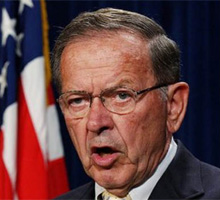
Happy birthday Senator Ted Stevens, you're fired!

Many have wondered whether Sarah Palin would run for the Senator Ted Stevens' Senate seat if he were to be expelled from the Senate due to his recent conviction related to more than $250K in gifts he accepted. Well this is a moot point now:
Sen. Ted Stevens, the longest serving Republican in Senate history, narrowly lost his re-election bid Tuesday, marking the downfall of a Washington political power and Alaska icon who couldn't survive a conviction on federal corruption charges. His defeat by Anchorage Mayor Mark Begich moves Senate Democrats within two seats of a filibuster-proof 60-vote majority. Source: Huffington Post
That's one heck of a birthday present, but it looks as if the people of Alaska have spoken. I have to admit that it seems crazy that the race was actually this close. I mean, after all Senator Stevens was actually convicted of this crime before the election even took place. It's amazing that a U.S. Senator can be proven of having extremely bad judgment at least, and a crook at worst, and the people would actually still almost vote him back in!

As for Governor Palin, it looks like she will have to find another way to Washington. The next Alaskan Senate seat is Lisa Murkowski's seat, whose term won't be up until 2011. It looks like Palin might as well stay in Alaska as governor, run for reelection in 2010, and go from there.

Of course Palin can always go to change.gov and fill out an application for the Obama Administration. However, my gut tells me that she won't be willing to submit to the necessary disclosures in order to get the job.

What do you think?

Happy birthday Senator Ted Stevens, you're fired!

Many have wondered whether Sarah Palin would run for the Senator Ted Stevens' Senate seat if he were to be expelled from the Senate due to his recent conviction related to more than $250K in gifts he accepted. Well this is a moot point now:
Sen. Ted Stevens, the longest serving Republican in Senate history, narrowly lost his re-election bid Tuesday, marking the downfall of a Washington political power and Alaska icon who couldn't survive a conviction on federal corruption charges. His defeat by Anchorage Mayor Mark Begich moves Senate Democrats within two seats of a filibuster-proof 60-vote majority. Source: Huffington Post
That's one heck of a birthday present, but it looks as if the people of Alaska have spoken. I have to admit that it seems crazy that the race was actually this close. I mean, after all Senator Stevens was actually convicted of this crime before the election even took place. It's amazing that a U.S. Senator can be proven of having extremely bad judgment at least, and a crook at worst, and the people would actually still almost vote him back in!

As for Governor Palin, it looks like she will have to find another way to Washington. The next Alaskan Senate seat is Lisa Murkowski's seat, whose term won't be up until 2011. It looks like Palin might as well stay in Alaska as governor, run for reelection in 2010, and go from there.

Of course Palin can always go to change.gov and fill out an application for the Obama Administration. However, my gut tells me that she won't be willing to submit to the necessary disclosures in order to get the job.

What do you think?